


A Guide to Climbing in Tasmania
Over the past summer, I spent some time in Fiordland. Over the course of the inevitable rainy days in Homer Hut, the question of where I lived would pop up. I’d mention Tasmania and then proceed to talk their ears off about how good the rock climbing was there until they politely excused themselves once they got sick of my psych.
Okay, maybe not quite. But close.
What stuck with me from those conversations was the number of strange ideas people had about Tasmania. One person thought it was too small to be inhabited. Another believed there was no real wilderness, and you couldn’t possibly walk for multiple days. And a third confidently claimed it was actually New Zealand’s best climbing.
That last one isn’t far off, but I wish I were joking about the other two. Out of my disbelief, this blog was born.
When to go
December through March is peak season, and for good reason. Long daylight hours, generally stable weather and mild temperatures make it easy to get a lot done.
I would like to give an honourable mention to the less popular months of April to August. Whilst the days do get short, and it can be quite cold (particularly in June to August), there are a few great crags that come into condition during these times, namely Bare Rock and Freycinet.
Still, if you’ve only got a few weeks, summer gives you the best shot at sampling a wide spread of Tassie’s classics.
Weather
Tasmania is a land of microclimates. The west coast gets significantly more rain than the east, and it can be pouring down in the south and clear in the north.
As a general rule:
Rainy weather? Head east- Freycinet or the Tasman Peninsula
Hot conditions? Go high- Ben Lomond or the Organ Pipes
West or southwest? Wait for a good high-pressure system
The takeaway: stay flexible and aim to only plan a few days in advance with a reliable forecast. In Australian terms, Tasmania is quite small and most of the climbing is within four-hour drive.
Beta and Resources
Before we dive into it, I will place a disclaimer that if you’re planning a trip the Climb Tasmania guidebook is fantastic and will give you everything you need to know. This is more of a short overview of some of the climbing in Tasmania to get you amped and is by no means a comprehensive list. In addition to the guidebook, Tasmania also has a free app called TheSarvo, which has almost all of the crags and routes in Tasmania however, the guidebook tends to be more user-friendly for visitors.

NORTH EAST
Ben Lomond
~1 hour from Launceston ~2.5
from Hobart
The North East is home to Ben Lomond. The cracks are splitter, pitches long and the location beautiful. It’s classic climbing on incredible dolerite. Home to a no bolt ethic, trad is the name of the game here. Conditions are relatively straightforward. It’s an alpine crag located at 1000m, so is generally only climbable in summer and warmer Autumn days.
Ben Lomond also has several areas. The northern escarpment is a great place to start.
EAST
Freycinet
~2.5 hours from both Hobart and Launceston
Moving East, we have Freycinet. A pet favourite for many. It’s east-facing and can get quite hot in summer; winter is prime season. However, if it’s on the cooler side or you climb in the morning and evenings, it can be great. It’s well worth the trip for the beauty and uniqueness of the place alone. Think clifftop camping, abundant seaside climbing on high-quality granite.

Classic adventures include the Sea Level Traverse- a wild journey above the ocean that many claim as one of their favourite days of adventure, ever.

The Star Factory is home to some of the best hard sport climbing Tassie has on offer.
Multi-pitching on the hazards is also a unique experience, along with the coastal crags.
Left: the classic route 'Alchemy'.
Right: The Sea Level Traverse
Left: multipitching on the Hazards
Right: The view.
SOUTH EAST (Mt Brown, Cape Raoul, Sea Stacks)
Mount Brown
~1.5 hours from Hobart ~3.5 hours from Launceston
Down to the South East for my personal favourite, the Tasman Peninsula.
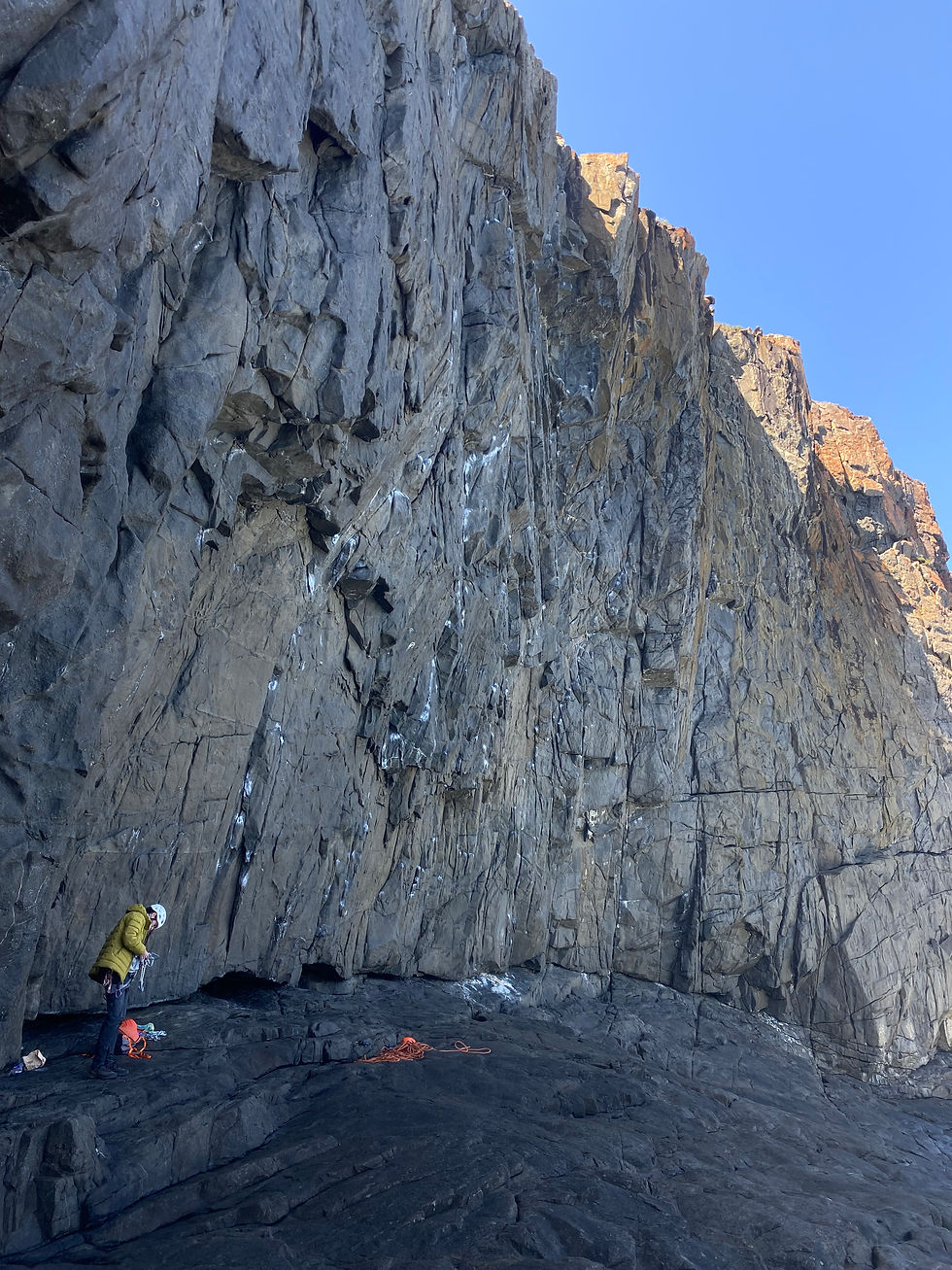
For one of the best sport crags in Tasmania, we have The Paradiso on Mt Brown. Seaside cragging that is slightly overhung on featured dolerite that is exceptionally good but somewhat frustrating in trying to get the right conditions. The humidity and wind play quite a role here and if you get it wrong, you’ll find yourself climbing on rock that feels like it’s been sprayed with soap. As a general rule, if the humidity is lower than 80% overnight and gets down to the 50’s and 40’s during the day, you’ll probably be in luck. Check the BOM forecast for Cape Pillar and don’t forget to do a jig to appease the conditions gods.

The spooge can be less impactful on other faces of Mount Brown, but may still be an issue if the wind is hitting the cliffs. However, it is worth the effort to decipher the conditions to go climb routes such as The Offerings, Psychoman, Thriller or How Hard Can It Be.
Cape Raoul
This may be one of the best climbing experiences in Tasmania. It can be done over one to three days and involves a wide repertoire of skills, including climbing splitters, exposed scrambling and exceptional arete climbing on an iconic Tassie pillar.
The Totem Pole
Speaking of pillars, we have the Totem Pole. Need I say much?
The Moai
The more friendly cousin to the other sea stacks is the Moai. It’s a delightful day out, and you’ll be questioning if you can climb grade 22 on Burning Spear.

The Forgotten Pillars
A relatively new development, The Forgotten Pillars holds a small number of high-quality multi-pitch crack climbs in an epic location.
The Organ Pipes
Hobart’s home crag, and what a home crag it is. It holds cracks of every size along with incredible, technical sport climbing. At 1200m, it’s a great option for the warmer summer days, with most of the crags going into the shade around 2pm in summer.
WEST
Geryon Traverse and The Acropolis
Another classic adventure. It will take you through some of the most beautiful wilderness in Tasmania.
For the crack fiends, adding in a few extra days to climb at The Acropolis is well worth it. Splitter crack climbing in a stunning location. Bring tape and a solid pain tolerance.

NORTH
Rysavvy Ridge
For those with a love for ridges, Rysavvy is up there with the best. Grade 12 conglomerate climbing that is, for the most part, on good quality rock.

NORTH WEST
Cradle Mountain may be the most popular tourist spot in Tasmania. Despite the people dodging required on the last part of the traverse, it is a classic of the genre. A grade 3 scramble that, on a clear day will provide views over the wild west of Tasmania. Be sure to tell an tourist on the way down from Cradle Mountain that your ropes are in fact, for the hike they’re doing.
One final disclaimer: this is only a small snapshot of climbing in Tasmania. There are countless other areas well worth visiting, and this list is undeniably shaped by personal preference. That said, if you manage to visit even half of these spots on a trip, you’re almost guaranteed a good time!


Comments